This article is part of a series I’m writing about President Trump and how his actions as candidate and incumbent have been “critical” in transforming the Republican party and American politics. The preceding article covered Trump’s 2016 rise to power and his efforts as president to dictate new political norms from within the federal government. This article describes his aberrant behavior during the 2020 presidential campaign, when he began treating voters as suspicious actors, while using double-speak to open the door to right-wing political violence.
As a first-term president seeking re-election, Trump had reasons to fear defeat. He had just narrowly escaped being found guilty in the Senate for abusing his powers. His unconventional conduct as president had been called out incessantly. Now, in the November election, the millions of Americans who thought he’d crossed the line would have the opportunity to use the power of their votes to get rid of him. Citizens across the country would weigh in on his performance and render a verdict as to whether he should continue in power. Instead of accepting the sovereignty of citizens as paramount, Trump sought to control the election process in response to the “threat” his fellow-citizens posed. By autumn, his willingness to foment violence to remain in power was obvious.
The 2020 presidential campaign unfolded amid these conditions: bellicose rhetoric from the president, civil unrest, a dangerous plague. Increasingly, the president expressed hostility and resentment toward the nation’s people: toward any American who criticized him, dissented, or was unmanageable or disorderly. Many of his own administration he forced out. In a nation based on toleration, Trump was openly intolerant. COVID vaccines had yet to come out and the disease was still raging, spreading whenever people gathered. Given the dangers of congregation, public places were deserted, with most Americans avoiding human contact and operating from home.
Under these conditions, the election season was peculiar. Stumping, rallies, and debates occurred amid bitter wrangling over public-health precautions and the social and economic costs of covid containment. The energy that normally flowed through mass gatherings went into social and mainstream media instead. The incumbent Trump railed against his own medical authorities, notably Anthony Fauci. Trump took the side of Americans who resented masking and social-distancing. To be fair, these and other covid-prevention regulations were onerous. They created hardship, disrupted household economies. They curtailed essential, everyday activities such as working, shopping, worshipping, running a business, and studying. In this matter, however, Trump again seized on what would work to his political advantage, rather than selflessly defending government policies that, while inconvenient, were best for the nation and the most humane. Instead, he denounced life-saving measures as tyranny.
Protests against covid “lockdowns” occurred in several states where high fatalities had prompted strict containment. April protests in the Michigan state capital of Ann Arbor drew over 20,000 protesters, including armed militias. On social media, Trump fanned these protests, styling them as a cry for freedom at the expense of political order and majoritarian rule. The libertarian-leaning demonstrations became another node of political unrest in a fractious time. At the same time, the president was indifferent to the high covid rates devastating cities and other areas with mainly “blue” (Democratic) constituencies.
Meanwhile, former vice-president Joe Biden emerged from a field of 26 contenders to sew up the Democratic nomination early on. Once again, Bernie Sanders was a contender, initially outperforming Biden, as did two other progressive candidates, Elizabeth Warren and Pete Buttigieg. Biden, however, secured the support of influential South Carolina congressman, Jim Clyburn, just before that state’s primary. Clyburn’s support proved pivotal. As the highest ranking African-American in the US House, Clyburn enhanced Biden’s position with respect to black voters in his state and beyond. The impact of the alliance between the two men went beyond that, however, influencing Biden’s choice of running-mate (Kamala Harris), tilting the Democratic party toward black progressivism (as expressed in BLM), and arguably locking in what the party’s ideological cast and leadership succession would be in 2024. By Super Tuesday, Sanders and others had withdrawn from the race, uniting behind Biden in a pitched race to defeat Trump and Trumpism at the polls.
At the state and county level, the covid pandemic posed special problems for election officials. They were responsible for running the election in ways that honored every eligible citizens’ voting rights. States implemented and expanded procedures for voting early or by mail, so that voters could exercise their rights without going to the polls. Some localities authorized the use of ballot drop-boxes, so that voters could return their ballots personally, given that the pandemic-era postal service was understaffed and the mail was slow. When an early debacle snarled the Iowa caucuses, the need for the most infallible voting procedures possible was driven home. In the end, the conduct of the 2020 election was highly creditable, thanks to all involved, from the secretaries of state on down to the local election officials who impartially run the polls.
Regardless, Trump endlessly assailed the integrity of the election procedures. He hadn’t won the popular vote in 2016, so higher Democratic turnout this time could mean his defeat. Conventional wisdom held that expanding ballot access would work to Democrats’ advantage. So, he and his surrogates did everything they could to impair and discredit pragmatic covid-related innovations in voting, especially those adopted in swing states and Democratic cities. It was an unsportsmanlike strategy. Should Biden win, Trump was poised to claim that Biden’s victory was a hoax, that the people’s choice was somehow suspect and illegitimate. At bottom, Trump was taking aim at the will of the people and their Constitutional rights.
Welcoming political militants into mainstream Republicanism was another aspect of Trump’s 2020 campaign. Trump’s willingness to condone violence against ordinary citizens was evident as early as 2017, when, on August 12, neo-Confederate white nationalists and other “alt-right” groups gathered in Charlottesville, Virginia, to protest the impending removal of a statue memorializing pro-slavery general Robert E. Lee. This so-called “Unite The Right” rally attracted many members of racist and anti-Semitic white-power groups (including neo-Nazis, Three-Percenters, and the Ku Klux Klan). Incendiaries such as Richard Spencer, Enrique Tarrio, and Nick Fuentes all took part. On the eve of the rally, this ragtag army of bigots marched in a torchlight procession, chanting slogans such as “Jews Will Not Replace Us,” “You Will Not Replace Us,” and “White Lives Matter.” The next day saw the groups return, some armed with clubs and riot shields, while a diverse array of counter-demonstrators (including church leaders, BLM activists, and civil rights advocates) also gathered. The event turned deadly, with a neo-Nazi protestor, James A. Fields, Jr., ramming his car into counter-protesters as they were leaving the event, wounding eighteen people and killing a young woman, Heather Heyer.
After the protest, Trump equated the two sides’ actions without excoriating those who had transgressed the bounds of legal protest to commit violent crimes. He eventually settled on a very fuzzy vision of events, blandly asserting that there were “some very fine people on both sides.” Violating long-standing norms and the laws of civil society as articulated in the Bill of Rights, Trump instead signaled his acceptance of militant hate groups, as long as they were working in support of his side.
In the months before the 2020 election, Trump’s hospitable attitude toward the “right kind” of political violence became more pronounced. He ignored that fact that all such violence was, and is, illegal and unconstitutional. As president, his sworn duty lay in upholding the rights of all citizens and defending principles of self-government. These, Trump neglected. After all, they conflicted with his reelection, his overriding goal. This personal aim was far dearer to him than the rights of others or the onerous limits the Constitution imposed. Trump became ever more obdurate about his absolute right to power, even as it became obvious that millions of American voters, perhaps a majority, wanted to see Biden in the presidency.
Trump and his associates Roger Stone and Rudy Guiliani began cultivating friendly relationships with white supremacists, notably Enrique Tarrio, who led the Proud Boys. Tarrio took part in the Unite the Right rally: he advocated violence against blacks and denied the epic horrors of the Holocaust. His group attained widespread name recognition during a live presidential debate in September 2020, when moderator Chris Wallace asked Trump if he planned to distance himself from far-right hate groups: would he ask them to “stand down”? Trump refused to criticize the Proud Boys, whose name was put forward as an example. Instead, Trump insisted that antifa groups were the real problem and asked the Proud Boys to “Stand back and stand by.” Right-wing groups were elated, with members of the Proud Boys taking Trump’s callout as an endorsement of their violent proclivities.
From this, proponents of alt-right violence learned that, though they might suffer arrest, they had nothing to fear from the president: Trump was neutral on their brand of political violence and perhaps even an ally. These groups gained more visibility as a consequence, becoming a recognized but problematic element in mainstream politics. Tarrio would end up in jail after his group vandalized a black church in Washington DC, but his criminality hardly mattered. His group and others like it were uniquely committed to Trump’s re-election, fully identifying his success with theirs.
Another unusual form of pro-Trump agitation re-emerged on social media in September 2020: a thought campaign known as “Stop The Steal.” This was a propaganda campaign that political operative Roger Stone began piloting in 2016. It was a social-media campaign aimed at fomenting mass opposition and unrest in the event that Trump’s rival won. In 2020, “Stop the Steal” became far more salient, both because it caught on with Trump’s base and primed them for action in case he lost. Millions of Americans came to believe that the election process was corrupt and unreliable, and that Democratic malfeasance was somehow to blame if Donald Trump lost. The prospect of a Trump loss became inadmissible to those whose minds were infected with “Stop The Steal.” They were primed to distrust the truth of election results. This lack of faith was like a dagger in the heart of a self-governing nation. “Stop The Steal” birthed an unfounded hostility toward electoral majorities at odds with the nation’s central principle that “the people rule.”
Amid a dangerous plague and a racially and politically charged atmosphere, the American people at last cast their votes. They voted in person, fed their ballots into drop boxes, put them in the mail. Some voted early from their covid hide-outs; others stood in long lines on November 3rd to vote in booths the old-fashioned way. Turnout was massive. Citizens were eager to assert their rights and make their voices heard. The US Census Bureau estimates that 66.8% of all eligible voters cast ballots in the election, a level of participation not seen in many years—in decades, really. In all, over 158.4 million votes were cast in the presidential contest, the most ever in American history.
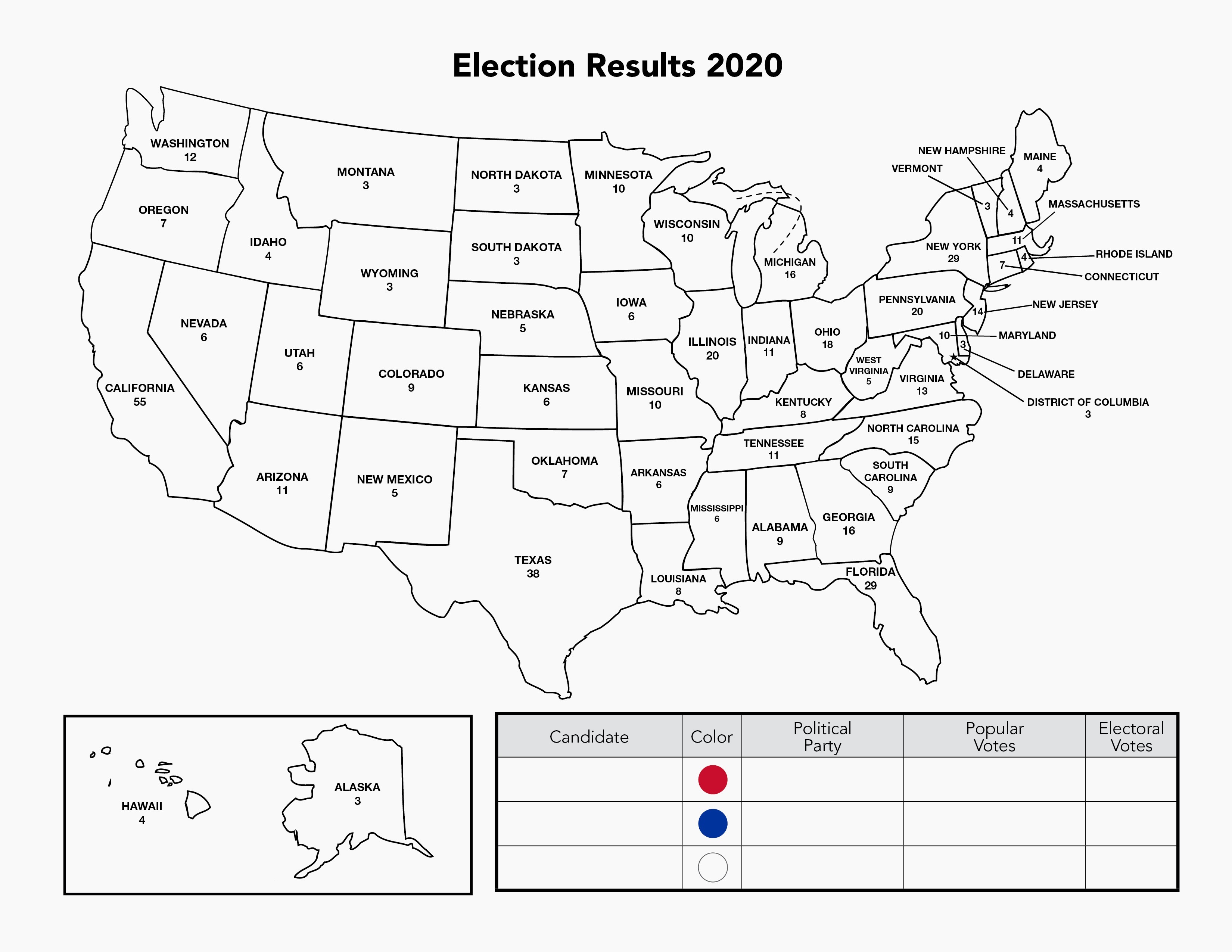
Because of the enormous volume of ballots and the laws governing the counting of mail-in ballots, state returns trickled in over several days. After several days of suspense, the Associated Press and other reliable news organizations ascertained on the morning of Saturday, November 7, that Biden had won. Conservative outlet Fox News called the race for Biden when results from Pennsylvania and Nevada showed him winning those hotly contested states. In the end, Biden scored a 4.4 percent advantage over Trump in the popular vote, garnering 81,282,632 votes to Trump’s 74,223,234 (a difference of over seven million votes). Likewise, in the Electoral College, Biden was the clear victor, ending up with 306 electoral votes to Trump’s 232. He prevailed there by a 74-vote margin. It was hardly a squeaker. Despite all the obstacles and Trump’s extraordinary efforts to intimidate citizens and discredit the election process, the citizens had spoken and Biden had won.
Respectfully submitted,
Susan M. Barsy, Ph.D.
Image: Screenshot of alt-right demonstrators opposing the removal
of a statue of defeated Confederate leader Robert E. Lee
at the “Unite The Right” Rally in Charlottesville, VA in 2017,
(footage from this source).