What is a touchstone? It’s a special rock mineralogists use to determine whether a shiny object is really gold. Metaphorically, a touchstone is anything that helps distinguish between what is truly excellent and what’s counterfeit. Intellectually, touchstones illuminate what’s wrong with Trumpism and how to oppose it incisively, in a way that’s appropriate and principled.
Touchstones recall what’s best in our political tradition and galvanize us to reject the fake, crude representations Trump constantly spews. At present, American politics is a battle between his word and ours. We must prevail against a leader who is un-American and mean.
Here’s political historian Timothy Snyder in late February, outlining why Trump’s position on Ukraine is so damaging to our position in the world, and so unwise. Trump’s public denigration of Ukrainian president Volodymyr Zelenskyy showed a willful disrespect for our own revolutionary tradition and, indeed, for the values of the entire Western world. Disdaining European friendships intrinsic to our security and prosperity, Trump has inexplicably cottoned to a pro-Russian narrative, subverting American ideals of self-government for the sake of a repressive foreign power bent on weakening us.
No matter what Trump claims, his radical positions on Ukraine and on trade are deeply damaging to our international relationships and US stature in the world. His policies weaken the nation and harm its citizens. He relishes driving the US into isolation–a situation that benefits only himself but not us.
Please circulate this post to others and let me know what you think.
Given the dire politics of today, the notion that the United States is undergoing a steep and irreversible decline is easy to entertain. The lifespan of republics being notoriously short, and the signs of decay being abundant, American prospects are suddenly, unexpectedly bleak. The nation that’s risen to such heights, that’s given its people so much, now seems destined to decline and fall. The conflict between the parties has been going on for so long, and the tone of public life is so low, and the bad people among us so bold and numerous, that many of us have reluctantly given up the nation for lost.
We have resisted and objected to each new outrage, each new manifestation of mendacity and corruption, but with such mixed results and with such persistence of myriad malignant forces that many of us are demoralized and exhausted.
Americans who have fought for years to marginalize Trump and keep good people in power have yet to score a decisive victory. Even now, two years after American voters defeated Trump at the polls, they cannot yet rejoice. It’s still too soon to rejoice, too soon to say that the federal system is safe.
Take heart. Americans have seen their nation deteriorating before. To be honest, much of US history consists of backsliding times, when wholesome pride in this glorious nation, and righteous service to it, has been nearly snuffed out, thanks to the wily machinations of low-lifes and thieves.
Even in times of peace and prosperity, the United States has suffered setbacks and indignities, as corrupt and self-seeking charlatans (such as James G. Blaine, depicted above) have tried to rise, aiming to monopolize a great system of government they can only disgrace.
Long is the fight, but good Americans are too stalwart to cede victory to the dark forces still pressing in.
Image: Bernhard Gillam, “The Honor of the Country in Danger,” published in Puck magazine 29 October 1884, from this source.
IMAGE NOTE: In this masterful 1884 political cartoon by Bernhard Gillam, the ghosts of George Washington and Abraham Lincoln stand watch over a presidential chair that the unworthy James G. Blaine aspires to. As the United States approached the centenary of its Founding in 1889, would the century that began with George Washington as president end in disgrace with the likes of Blaine? (Opponents dubbed Senator Blaine, “the Continental Liar from the State of Maine.”)
In the 1884 election, Democrats sought to rout a Republican party that, since its glory days in the Civil War (1861-1865), had grown disreputable and corrupt. The Republican Party’s rise to power in the 1850s on the strength of its principled opposition to slavery, coupled with its noble defense of the Union and victory over the rebel proslavery states, issued in an enduring political monopoly. Beginning with Lincoln’s election in 1860, Republicans controlled the White House for twenty-four years. The Democratic Party, having been tolerant of slavery before the war, was tainted and nationally anathema for all this time.
During Reconstruction (1865-1876), Republican control of the federal government guaranteed that former slaveholders would not regain power and undo all that the Civil War had so painfully accomplished. Excessive power in the hands on one party, however, allowed political mendacity and corruption to flourish. In addition, support gradually waned for the monopolistic use of federal power (including military power) to protect minority rights in Southern states. Open-ended coercion violated the principles of self-government and reserved state powers on which the Constitution is based.
In 1876, these contradictions and other, more ignoble considerations led the Republicans to abandon the Reconstruction policies that had kept the former Confederate states from reverting to the status quo ante bellum. Thereafter, commercial prosperity replaced racial equality as the Republican Party’s top priority. The Grand Old Party’s degenerate condition became unmistakably evident in 1884, when it chose the slippery James G. Blaine as its presidential nominee.
In the cartoon, Blaine is depicted as an imposter who is out of his league. His scandal-ridden past is indelibly tattooed on his flesh. The flimsy cloak he wears can’t hide his true nature as a servile tool.
He stands abased before the lofty legacy of past presidents. His hat, labeled “Corruption,” is falling off, as, quaking, he begins his assault on the nation’s highest office. Leaning against him and pushing him from behind is Jay Gould, who excelled in getting government concessions for the railroads he owned. Gould has his sights set on stacking the bench. The paper he holds reads “Four Supreme Court judges to be appointed by the next president.”
Also behind Blaine is Stephen W. Dorsey, a former US Senator implicated in the “Star Routes Scandal,” whereby a circle of profiteers bilked the Treasury of millions of dollars by colluding on bids for carrying the mail. Dorsey is depicted as a bootlicker. Next to him on the floor is a paper that reads “Honesty No Requisite for the Presidency (Blaine’s Theory).”
Finally, to the right of the stairs stands Benjamin F. Butler, dressed up as a court jester possessing a “Bargain with Blaine.” Butler’s controversial actions as the military governor of wartime New Orleans, coupled with his opportunistic political maneuverings, made him a weathervane of the Gilded Age. Vastly wealthy as a result of both honest and questionable business dealings during the Civil War, Butler was arguably providing cover for Blaine in 1884, for he was on the ticket as a third-party presidential candidate for the People’s Party. Rumor held that Butler’s candidacy was a Republican-backed sham, to draw off votes from Blaine’s opponent, Democrat Grover Cleveland.
It was no use. On Election Day in November 1884, Americans went to the polls and saved the nation from James G. Blaine. They rejected the stink of Republican corruption and, for the first time since 1856, elected a Democratic president.
I knew you would be trouble but I didn’t anticipate how much or for how long. I didn’t anticipate how high-maintenance you would be, when you, with your big head, your big mouth, and your shocking ideas, eclipsed every other craven presidential wannabe in that first GOP cattle call back in 2015. Continue reading →
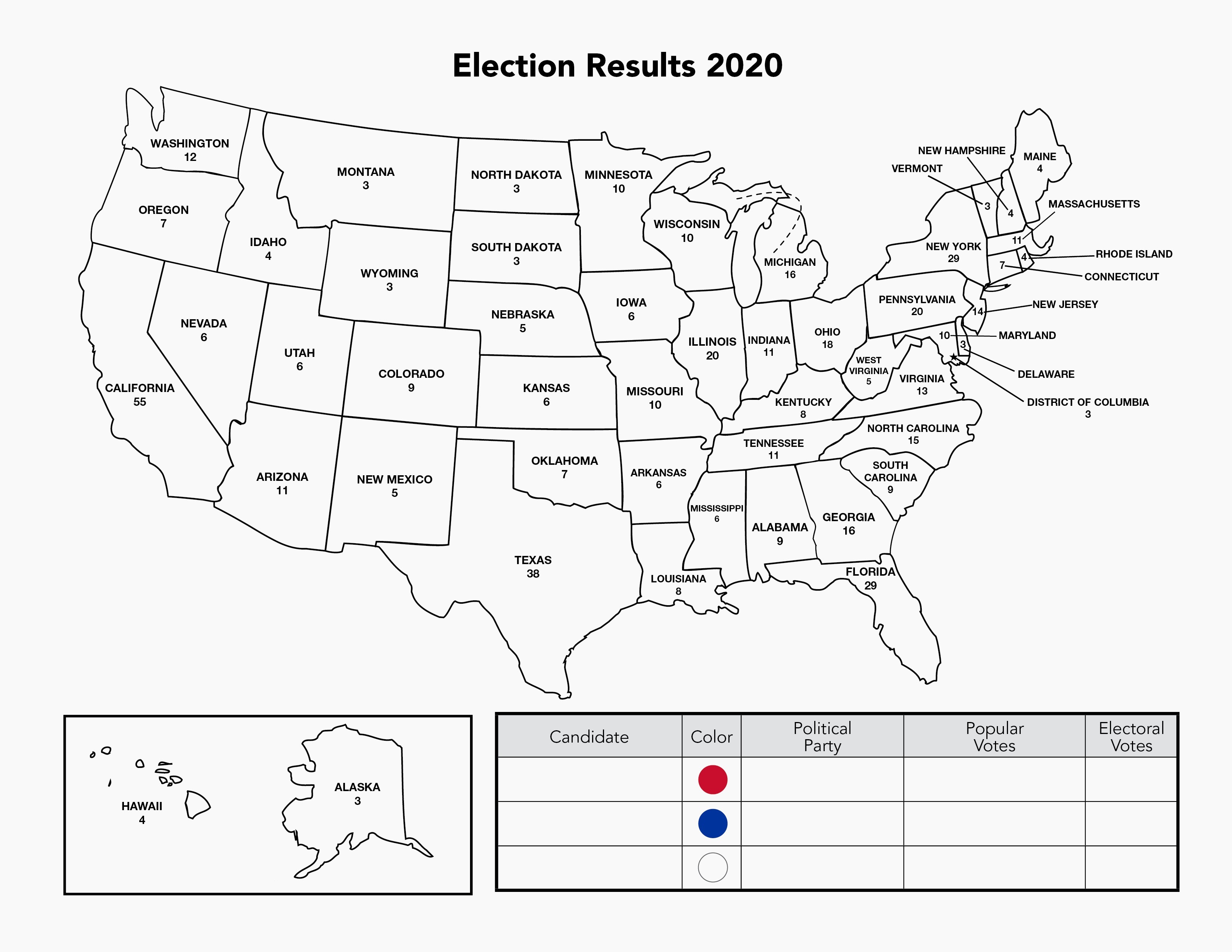
Where Trump beat Biden in 2020, his margin of victory was often wide. Listed below are the states where Trump prevailed, in order of his relative popularity. The results show where Democrats are least competitive, where Trump prevails because of an absence of viable competition.
After that is a second list, of the ten states most closely decided in 2020. In four states (Georgia, Arizona, Wisconsin, and Pennsylvania), Biden prevailed by a margin of less than one percent. Had these states gone the other way, Trump would still be president.
The political crisis of the United States will resolve when a rival party becomes ideologically competitive in the many states where Trump dominated comfortably last time around. Many of these states are small. How to woo votes away from Trump in these areas is an experiment worth embarking on prior to the election of 2024.
KEY: State (Electoral votes) NUMBER OF VOTES CAST FOR TRUMP / Margin of victory
Wyoming (3) 193,559 / 43.3 %
West Virginia (5) 545,382 / 38.9 %
North Dakota (3) 235,595/ 33.3 %
Oklahoma (7) 1,020,280 / 33.1 %
Idaho (4) 554,119 / 30.8 %
Arkansas (6) 760,647 / 27.6 %
South Dakota (3) 261,043 / 26.2 %
Kentucky (8) 1,326,646/ 25.9 %
Alabama (9) 1,441,170 / 25.4 %
Tennessee (11) 1,852,475 / 23.2 %
Utah (6) 865,140 / 20.5 %
Nebraska (4/5) 556,846/ 19.1 %
Louisiana (8) 1,255,776 / 18.6 %
Mississippi (6) 756,764 / 16.5 %
Montana (3) 343,602 / 16.4 %
Indiana (11) 1,729,516 / 16 %
Missouri (10) 1,718,736 / 15.4 %
Kansas (6) 771,406 / 14.6 %
South Carolina (9) 1,385,103 / 11.7 %
Alaska (3) 189,951/ 10 %
Iowa (6) 897,672 / 8.2 %
Ohio (18) 3,154,834 / 8.1 %
Texas (38) 5,890,347/ 5.6 %
Florida (29) 5,668,731/ 3.3 %
North Carolina (15) 2,758,775/ 1.3 %
Maine (1/4) 360,737* / -9.1 %
*Votes garnered in Maine gave Trump 1 electoral vote out of a possible four.
The most closely contested states in 2020: Biden’s narrowest margins
Your donation helps ensure that American Inquiry remains freely available instead of hidden behind a paywall. Contributions can be given in $10 increments by using the quantity button. Your total will appear on the subsequent payment page. Many thanks!
In December 2017, about a year into Donald Trump’s presidency, high-school student Nicole Plummer came to me with some questions about critical elections and the 2016 election that brought Trump to power. Our exchange highlights the role of retrospection in determining whether an election has been critical. A critical election leaves the party system changed by reconfiguring party ideology in a lasting way.
Here, without further preamble, is my exchange with Miss Plummer.
Q: Can certain tell-tale signs be observed in the time leading up to a critical election?
A: Typically, critical elections occur when the nation faces an underlying problem that the existing parties can’t admit to or solve. The problem is big enough to influence all society and the nation’s future. In a critical election, the problem is not only admitted, but an approach to it is offered that the majority of people assent to in an enduring way.
Critical elections happen when people are bored with prevailing political ideas or ambivalent about what candidates are offering. So I imagine that if you looked back at periods before a critical election, you might find lackluster voter turnout, a rise in the percentage of unaffiliated voters, and perhaps also new splinter groups (which are trying to find the right formula for mobilizing the electorate in a new way).
During the campaign leading up to a critical election, one might observe the following: 1) appeals to previously neglected blocs of the electorate; 2) campaign planks (i.e.talking points or principles) that are truly new or innovative; 3) iconoclastic individuals, whether candidates or, in rare instances, their managers, espousing a new vision of society; 4) signs that the political ideas being promoted are being wholeheartedly adopted not just by a cadre of leaders but by a wider swath of society.
Remember that the concept of a critical election is something observers have made up to help differentiate among elections and distinguish their results. Many election cycles feature some of the characteristics above, but it ends up being a matter of degree. For example, the Tea Party succeeded in bringing a new cadre of conservative opposition leaders into national politics during Obama’s presidency, but this faction failed to broaden its appeal to the extent needed to become a dominant party. Likewise, Bernie Sanders is iconoclastic and has articulated several goals new to mainstream politics, but so far he hasn’t converted all Democracy to his way of thought.
Q: Why are critical elections important for a functioning democratic society?
A:Critical elections refresh the identification that should exist between leaders and the people. When a leader (or group of leaders) capable of mobilizing the political structure around new and more relevant ideas comes along, the populace benefits. That’s because the dominant party will then mirror, and do all it can to meet, the American people’s needs and desires. What bothers many people about today’s Republican party is that its actions don’t correspond very well to the needs and concerns of the populace (who don’t want to see their insurance premiums go up or their health coverage disappear, for instance). Similarly, many Americans don’t care about the protection of union workers that is a hackneyed Democratic theme.
Q: Was one of the six critical elections that you identified more influential than the others?
A:The election of 1860 prompted states to secede, triggered the Civil War, and put slavery on the path to extinction (which directly affected millions of enslaved people), so I would say that election had the most profound effect on America, both subsequently and on those who were alive at the time.
Q: Are Democrats and Republicans here to stay? Will these two parties just keep evolving their policies or will they eventually give way to new groups based on changing ideologies in the U.S.?
A: I don’t know. Ironically, it’s hard to say which of these parties is more messed up. The Republicans are in a state of inner crisis despite holding almost all the power. The Democrats have ideological unity but are indifferent to the fact that millions of Americans find their message unpalatable.
The two major parties are not just vehicles for ideas; they are also bureaucracies that do not want to be extinguished. In the 2016 election, both Trump and Sanders decided it was more to their advantage to work from within these structures rather than go out and find enough likeminded people to start an effective third party. To start a new party, one would have to assemble and coordinate a group of like-minded peers working to organize similar parties in a number of states. Will Trump’s climb to the top of the Republican party actually change it into a more salient party, though? It’s hard to say.
Q: If you had to pick one almost critical election from U.S. history, what would it be? (i.e. an election that was monumental but didn’t quite meet the criteria)
A:Barack Obama had the opportunity to change the Democratic party into something new in 2008 but failed to do so because his ties to the party establishment were too slight. He became president at too early an age–if he had stayed in the Senate longer, he would have ended up being a much more effective party leader.
Obama was a centrist looking to find a way beyond big New Deal-type governance. His major achievement, creating universal access to health care, was significant in that it sought to benefit every American, not just those in need. His presidency eschewed identity politics. His second inauguration envisioned a nation that was republican, enlightened, and fully inclusive.
Q: Do you believe that critical elections need to coincide with social, economic, or political upheaval?
A:No, they bring change to the society afterward. Critical elections often follow periods of staleness, stagnation, or cultural drift.
Q: Why do you think reforming our parties is so difficult at this moment in political history?
A: Historically, politicians did not have the “tools” of social science (polling, marketing techniques, etc.) so their sense of what would work with the electorate had to be more instinctive. They took up positions that were shaped by their direct knowledge of and intuition about the people. Also, once in office, they were more confident in using the powers delegated to them, without needing to consult their constituents on every little thing. Trump and Sanders were both remarkable during the campaign, in that each had a few fervently held beliefs that they truly believed in, and that they held to despite what anyone else (e.g., the media) thought. They each were taking a risk that Hillary Clinton was incapable of taking. If you want to be a leader, you’ve got to lead, not just obey your constituents, your paid consultants, your political friends.
Q: What is your opinion on how politics and campaigns are currently run? Was it better back in the “good-old-days” or has campaigning simply evolved with society to meet the needs and interests of the general populace? Is this evolution good or bad?
A:The people have the power to effect change. When their will is aroused, change does occur. (Look at the drastic change that’s followed from the 2016 election.) American politics swings back and forth like a pendulum. Critical elections occur when effective leaders channel the popular will into effective results. When the right kinds of leaders come up, the reigning ideology changes in a “good way” and the political system becomes endowed with a positive (if also scary) new dynamism.
As recent partisan conflict testifies, the falling away of an old ideology and the birth of a new, widely supported one can take an excruciatingly long period of time. In Lincoln’s time, escalating sectional tensions ate into the regnant parties for more than a decade before the iconoclastic anti-slavery party he was part of broke through. Initially a “fringe movement” that recast its message to broaden its mainstream appeal, the Republican party scored an electoral victory that put Lincoln in power.
Q: Does the 2016 election have the potential to become the 7th critical election? Is it too soon to tell?
A: In a critical election, the character of the entire party changes in a lasting way. Will Trump’s ideas really gain traction with establishment Republicans? I have a feeling that many on Capitol Hill loathe the president and are just waiting him out.* Some of Trump’s ideas—his concern about the quality of life for displaced and forgotten American workers and his understanding of how this issue is associated with immigration, domestic security, and the specter of our country’s hegemony giving way to that of China—define potent fears that other US leaders should countenance and address in a more palatable but still firm way. We urgently need a slate of federal goals the whole nation can embrace—otherwise, society will keep deteriorating, and social goods we all prize will be lost.
* Liz Cheney’s ouster from her leadership role in the House yesterday confirms that 2016 was “critical” in that Donald Trump shattered the bland traditionalism of the Republican party, replacing it with a cult of personality. Those who remain in the party in 2021 overwhelmingly support Trump and his dangerous lies. His vicious character and indifference to the Constitution have driven away millions, weakening the party and forcing many of its former leaders out. Where will this disaffected part of the polity go? Will the coming year will see the birth of a constructive centrist party, perhaps under the leadership of the redoubtable Mitt Romney?
Your donation helps ensure that American Inquiry remains freely available instead of being hidden behind a paywall. Contributions can be made in any $10 increment by clicking the quantity button. Your total will appear on the subsequent payment page. Many thanks!